Showing posts with label book club. Show all posts

Thursday, 26 February 2015

Book Club: "Creativity in Museum Practice" HME Meeting Notes Feb 23, 2015

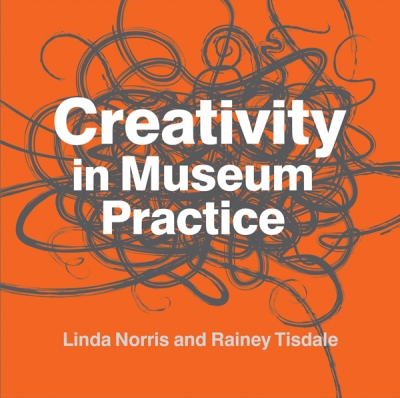
norris cover 
Creativity in Museum Practice” by Linda Morris and Rainey Tisdale

Thanks to everyone who braved the cold to join us at Mex-i-can in Hamilton this Monday!

We had a great discussion with people who'd read the book cover to cover, some who'd just skimmed it, and others who haven't gotten to it yet.

Overall, this book was deemed a valuable purchase.

You should invest in this book because:
  • Pocket guide in back
  • it's simple
  • Chapter 2 is meatier "building creative cultures", recruiting creative boards
  • Eg: opportunities for creativity in board meetings, almost like warm up exercises like the "Mystery object"
  • helps people to understand the cost of doing business eg: have people play a sort of price is right game, with board/colleagues eg: understand cost of advertising, etc...
  • Speaking with staff that aren't involved in financial undertakings
  • "Get buy in"
  • Chapter three tools for creative culture
  • suggests you observe target audience intentionally, as well as analogous environments
  • Helpful for strategic plans, training volunteers, program development
  • it suggests you read outside your discipline to gain perspective and a mental break
  • useful in workshops: the creativity inventory and mind maps were used to facilitate an interdisciplinary group of graduate students' exploration of creativity

Things to watch out for:
  • allow for the book (especially the first chapter) to appear too elementary because later chapters expand the ideas and suggestions
Other great ideas from the meeting:
  • Get staff meetings scheduled for 2 hrs before end of day, people motivated to stay on topic
  • Have specialized meetings for marketing, education, etc...

Tuesday, 26 February 2013

Book Club: Teaching in the Art Museum: Interpretation as Experience: HME Meeting Monday February 26, 2013

Yesterday evening HME members met at the Duke of Wellington pub in Waterloo and discussed this year's book club selection, Teaching in the Art Museum: Interpretation as Experience by Rika Burnham and Elliott Kai-Kee.

Focusing on chapters surrounding touring, asking questions, and the efficacy of various teaching techniques, we found some interesting similarities between us:

-both art museum and history museum educators agreed that discussion and dialogue were techniques we tended to use with groups of visitors, especially formal ones
-conversational techniques, while very engaging and memorable, are techniques we had not utilized frequently, nor with large groups. This teaching style seems to be more appropriate to one-on-one, or very small, informal groups
-as museum-goers, we found that generally, participating/answering questions in a tour is not necessarily something we're looking for, nor expect

The discussion came around to generational distinctions, and how this book (like many others) is focused on attracting people with engagement and participation. This raised questions, such as:
-do most of our visitors expect this experience in a museum?
-do they want this experience?
-if this approach is indeed best for youth, how can a docent most effectively handle a multi-generational group visit?

If anyone has read the book, and would like to add their thoughts, please do comment on this post. 

Thanks again to everyone who attended; we're looking forward to the next meeting in March!      

Wednesday, 23 January 2013

Get Reading! February's Book Club

As is tradition in HME, we're holding a book club for February's evening meeting.

Teaching in the Art Museum: Interpretation as Experience 
 Rika Burnham and Elliott Kai-Kee

More details about the book here.

It's available from Amazon.ca and Chapters.ca.

We suggest reading the introduction, as well as Chapters 5 and 6.
(It appears that you can get the intro for free on Google Books.)

Despite the title, this book does contain information and suggestions that apply broadly to museum education, rather than being exclusively for art museums.

We're looking forward to a lively discussion!

Here are a few questions to get you started:

-In Chapter 5, "conversation, discussion, and dialogue" are outlined as different approaches to teaching and talking in a museum. Which do you find yourself doing most often? Which do you prefer as a museum-goer?

-Chapter 6 is thought-provoking; it questions the use of questions in museum education. "By not asking questions, it allows learners to ask their own questions". An example of this technique is provided in the chapter. Do you think you can apply this approach in your museum?